LS swap Edmonton
LS swaps and engine builds in Edmonton
LS and diesel conversions. Old iron, modern heart — starts at minus thirty.
An LS swap in Edmonton is more than dropping in an engine. Mounts and crossmember, driveline angles, a standalone harness, fuel system and a cooling package all have to be built around it. 2240 Speed Shop handles LS and diesel conversions as complete jobs, tuned to start cold and run through an Alberta summer.
We also build the engine you already own. Sometimes rebuilding beats replacing — on a car where originality matters, or where the block is good and the budget is better spent elsewhere in the build.
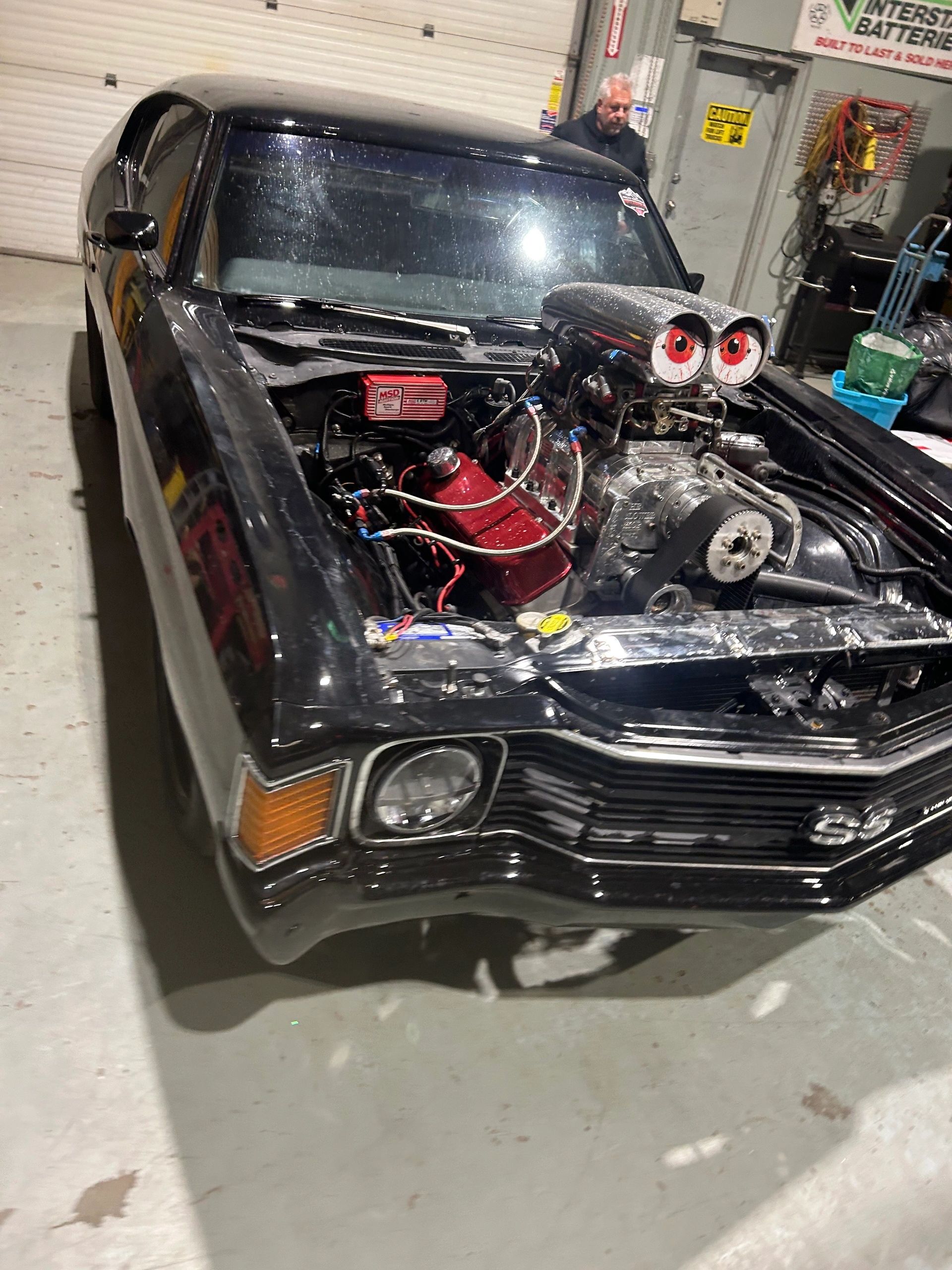
No marketing version
What this actually involves
LS swaps
The LS family swaps into almost anything because the parts exist — but parts existing is not the same as bolting in. Oil pan clearance over a crossmember, accessory drive width against frame rails, header routing past the steering, and transmission tunnel work are the real job.
We fabricate mounts rather than trusting a universal plate, because a swap that sits five millimetres wrong shows up later as a driveshaft angle you cannot fix.
Diesel conversions
Cummins and Duramax swaps into classic trucks add weight to the front axle and torque to everything behind it. Springs, steering, driveshafts, rear end and brakes get re-specified rather than hoped for.
Done right, it tows and it starts. Done cheap, it twists a driveshaft in the first winter and takes a transmission with it.
Mounts, crossmembers and driveline angles
Engine, transmission and pinion angles have to agree or the car vibrates at highway speed and eats U-joints. We set the driveline on the hoist with the suspension loaded, then build mounts to that — not the other way around.
Wiring and the standalone harness
A swap harness is where most home builds die. We lay in a standalone harness, label it, route it away from heat and exhaust, fuse and ground it properly, and integrate gauges, charging and the ignition switch.
When something needs diagnosing five years from now, somebody has to be able to follow it. That is a build decision made on day one.
Cooling and heat management
A modern engine in a 1960s engine bay makes more heat than the original radiator ever saw. Aluminum radiator sized to the engine, electric fans on a proper shroud with a relay and thermostat control, transmission cooler, hood clearance and heat shielding on the firewall side.
The test is idling in an August parade line, not a highway run with air flowing through the grille.
Cold-start reality
Alberta decides whether a swap was done properly. Block heater, battery and cable sizing for the real load, a charging system that keeps up with fans and heater, the right oil weight, and fuel and coolant specced for actual winter.
Old iron, modern heart — it has to fire at minus thirty, not just idle nicely in September.
Indicative ranges
What does an LS swap or engine conversion cost?
Swap pricing swings hard on what you supply and how finished you want it. A running takeout engine into a well-supported chassis is a different project from a crate engine, new transmission and a full cooling package.
These are indicative ranges in Canadian dollars. They are not quotes. Every build is priced after we see the vehicle — condition, parts availability and the finish level you want move these numbers in both directions.
| Work | Indicative range (CAD) | What moves the number |
|---|---|---|
| LS swap using a running takeout engine | $12,000 – $25,000 | Chassis support, how much fabrication the mounts and tunnel need, condition of the takeout. |
| LS swap, new crate engine and transmission | $22,000 – $45,000 | Crate spec, transmission choice, accessory drive, and whether the rear end can take it. |
| Diesel conversion into a classic truck | $25,000 – $60,000 | Front suspension and steering upgrades, driveshafts, brakes, cooling and exhaust routing. |
| Standalone harness, install and tune | $2,500 – $6,000 | Harness quality, gauge and accessory integration, how much of the original wiring gets replaced. |
| Cooling package (radiator, fans, shroud, lines) | $1,500 – $4,000 | Core size available in the opening, fan and shroud fabrication, transmission cooler routing. |
| Mounts, crossmember and driveshaft fabrication | $2,000 – $6,000 | Whether a proven kit exists for the chassis or the whole thing gets made in-house. |
Ranges above are indicative only and assume the vehicle is here in front of us before anything is committed. We quote in writing after an inspection, and changes get a phone call and a photo — not a surprise at the end.
Want a real number instead of a range? Send photos and the vehicle details — or call the shop at 780-999-6450.
Questions we actually get
Engine Swaps & Builds — straight answers
The questions people ask before they hand over a car. If yours is not here, call the shop at 780-999-6450.
How much does an LS swap cost in Edmonton?
It swings widely on what you supply. A swap around a running takeout engine into a well-supported chassis costs far less than a new crate engine, transmission, harness and cooling package. The ranges on this page are indicative. The real number depends on the chassis, the parts you own, and how finished you want it.
Will an LS swap start at minus thirty?
It will if it was built for it. That means a block heater, a battery and cables sized for the load, a charging system that keeps up with fans and heater, the correct oil weight, and a fuel system with no water in it. Cold starting is a build decision, not luck.
Can you swap a diesel into a classic truck?
Yes. Cummins and Duramax conversions are common in classic trucks, and they change far more than the engine bay. Front springs, steering, driveshafts, rear end and brakes all get reviewed against the new weight and torque. Done properly it tows. Done cheaply it breaks parts behind the engine.
Do you build engines, or only swap them?
Both. An engine you already own can be rebuilt or built up instead of replaced, and sometimes that is the better call — especially where originality matters. Machine work gets specified to the combination the car will actually run, not to a horsepower number from a parts catalogue.
Can I keep my original wiring harness?
Not for a modern fuel-injected engine. Those need a standalone harness with proper fusing, grounds and sensor routing. We lay it in labelled and routed away from heat so it can be diagnosed years later. A sixty-year-old original harness is usually due for replacement regardless.
How long does an engine swap take?
A straightforward LS swap into a well-supported chassis is measured in weeks of shop time. Fabrication-heavy conversions, diesel swaps, and anything needing bodywork to clear the engine run longer. Parts lead times, not labour hours, are usually what stretch the calendar. You get a stage plan before we start.
What else does a build like this touch?
Most projects cross more than one bench. These are the trades that usually run alongside engine swaps & builds.
Performance & Tuning
Carbs rebuilt and dialed. Points to electronic ignition. Horsepower you can feel.
Performance detailsRestomods & Hot Rods
Classic skin, modern spine. Rolling works of art with brakes that work.
Restomods detailsRestoration
Frame-off or rolling. Honest scope, real hours, one standard.
Restoration details
Hauling a project in from out of town? See the Edmonton-area map — Edmonton, Sherwood Park, St. Albert, Leduc, Nisku and the county roads between them. Or go straight to the quote form.
Planning a swap?
Talk to us before you buy parts. Half the money wasted on swaps gets spent before the engine ever arrives at a shop.
2009 91 Ave NW, Edmonton AB · Mon–Fri 9:00–17:00